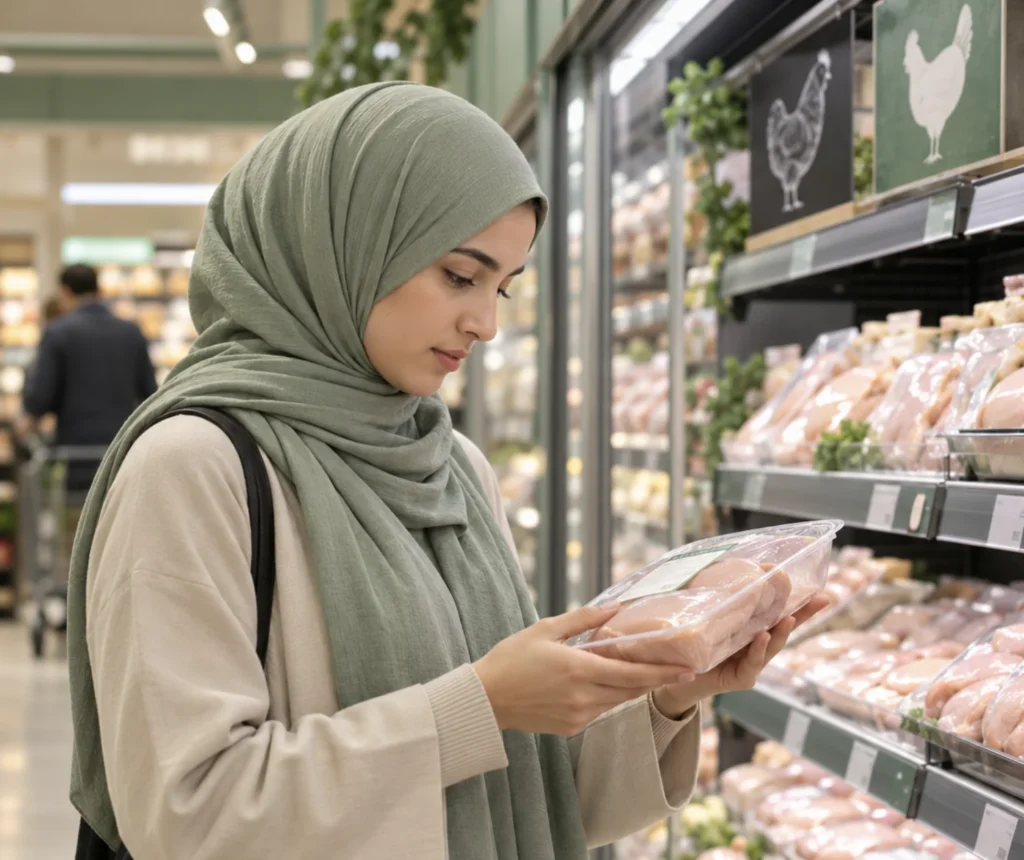
You’re standing in the supermarket holding a pack of chicken. The label says very little, there’s no clear logo, and you wonder whether it’s really halal. Then you walk past the sausages and burgers, and the question gets harder: what exactly is in there?
If this sounds familiar, you’re not alone. For millions of Muslims in the UK, the US and across Europe, buying halal meat is part of everyday life, yet it isn’t always simple. Certification logos vary, labels can be confusing and processed products often hide ingredients you can’t easily spot.
In this guide, we explain clearly what halal meat means, how halal slaughter works, how halal compares to regular and kosher meat, and what the law says. You’ll also learn how to recognise a trustworthy halal certification and what to check before buying halal chicken, sausages or burgers, so you can shop with complete peace of mind.
What is halal meat? Meaning and basics
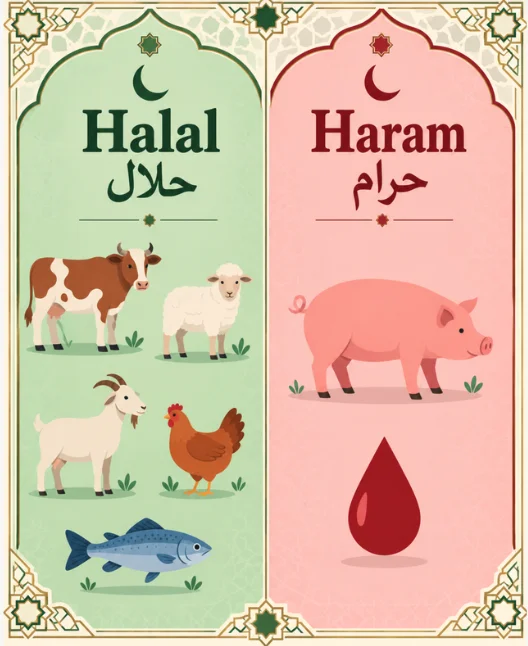
Halal meat is meat that Muslims are permitted to eat under Islamic law. The Arabic word halal (حلال) means “lawful” or “permitted”, and its opposite is haram (حرام), meaning “forbidden”. For meat to be halal, two conditions must be met: it must come from a permitted animal, and the animal must be slaughtered according to Islamic rules.
The halal concept goes beyond meat. It applies to all foods, drinks, ingredients and additives. That’s why a halal diet means looking past the steak or chicken breast and checking what goes into processed products too. Between what is clearly halal and clearly haram there is also a grey area, known as mushbooh (مشبوه), or “doubtful”, which many Muslims choose to avoid out of caution.
Permitted and forbidden animals
Most commonly eaten farm animals are halal, provided they are slaughtered correctly. These include beef, lamb, goat, chicken, turkey, duck and rabbit. Fish and seafood are considered halal by most schools of thought, although some schools differ on certain types of shellfish.
Forbidden foods include pork and all its by-products, carnivorous animals with fangs, birds of prey, animals that died before slaughter, and blood. The ban on pork is the best known, but it also extends to hidden ingredients such as lard, some types of gelatin and certain fats used in food manufacturing.
How is halal meat slaughtered? Understanding zabihah
Halal slaughter, known in Arabic as zabihah or dhabihah (ذبيحة), is the method that makes the meat of a permitted animal halal. It isn’t just a technique: it carries a spiritual meaning, recognising that the animal’s life is a gift from God and treating it with respect until the very end.
The requirements of zabihah
Although there are small differences between schools of thought, the most widely accepted requirements are:
- The animal must be alive and healthy at the time of slaughter.
- The person performing the slaughter must be a sane adult Muslim who understands the act.
- The name of God is invoked before the cut, usually with the words “Bismillah, Allahu Akbar”.
- The cut is made with a very sharp knife, swiftly and in one motion, severing the windpipe, the oesophagus and the jugular veins, without cutting off the head.
- The blood must be fully drained, since consuming blood is forbidden.
- Unnecessary suffering is avoided, for example by not sharpening the knife in front of the animal or slaughtering it in sight of others.
These principles explain why, within Islamic tradition, zabiha halal slaughter is seen as an act of respect towards the animal, not simply a procedure.
Hand slaughtered halal and machine slaughter
In poultry processing, large plants sometimes use mechanical blades. Many Muslims and certifiers accept this if a Muslim invokes the name of God and supervises the line, while others only accept hand slaughtered halal meat, where each animal is slaughtered individually by a Muslim. If this matters to you, look for products clearly labelled as hand slaughtered or check the standard of the certifier.
Stunned vs non-stunned halal
One of the most debated topics is stunning, which means making the animal unconscious before the cut. It is standard practice in Western slaughterhouses, but the law in the UK and Europe allows exemptions for religious slaughter.
There is no single position within the Muslim community. Some certifiers accept certain types of recoverable stunning, provided the animal is still alive when slaughtered. Others only certify non-stunned meat. That’s why it’s worth knowing which approach the certifier behind each product follows.
Difference between halal and regular meat
The main difference between halal and regular meat isn’t taste or appearance, but origin and process. A halal chicken breast and a non-halal one may look identical. What changes is everything that happens before it reaches your plate.
| Aspect | Halal meat | Regular meat |
|---|---|---|
| Animal | Permitted species only | Any species approved for consumption |
| Slaughter | Islamic method (zabihah), invoking the name of God | Standard industrial method |
| Stunning | Depends on the certifier’s standard | Required as a general rule |
| Bleeding | Complete, as a religious requirement | Usual, with no religious requirement |
| Handling | Kept separate from haram products throughout | No specific separation |
| Oversight | Independent halal certifier | General food safety controls |
One point that is often overlooked is handling after slaughter. To stay halal, meat must not be mixed with or contaminated by pork or other haram products during cutting, processing or packaging. That’s why certifiers inspect the whole supply chain, not just the slaughterhouse.
Is halal meat healthier?
There is no strong scientific evidence that halal meat is healthier than regular meat. In the UK and the US, both must meet the same food safety standards. Some people value the complete draining of blood or the extra oversight of the supply chain, but choosing halal meat is above all a matter of faith and values, not nutrition.
Halal vs kosher: what’s the difference?
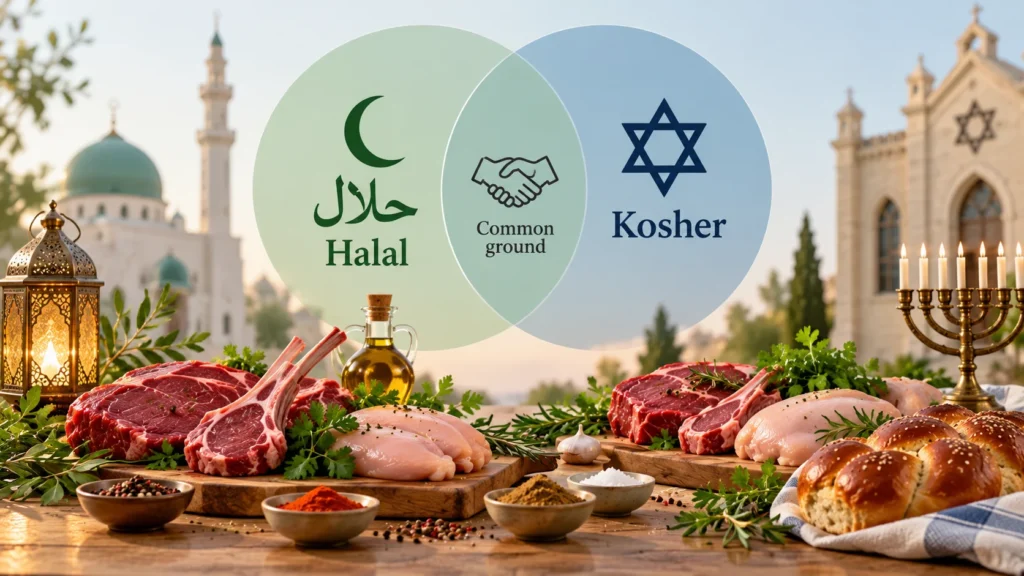
Halal and kosher are often mentioned together because they share a lot of common ground. Both come from religious dietary laws, both forbid pork, and both require animals to be slaughtered with a swift cut by a trained person and the blood to be drained. However, they are not the same, and the differences matter.
| Aspect | Halal | Kosher |
|---|---|---|
| Religious source | Islamic law (Quran and Sunnah) | Jewish law (Torah and rabbinic tradition) |
| Who slaughters | A Muslim | A trained Jewish slaughterer (shochet) |
| Invocation | The name of God over each animal | A blessing, not necessarily over each animal |
| Alcohol | Forbidden, including in ingredients | Kosher wine and alcohol are allowed |
| Meat and dairy | Can be eaten together | Must be kept strictly separate |
| Shellfish | Permitted by most schools | Forbidden |
| Blood removal | Draining at slaughter | Draining plus salting or soaking |
Is kosher meat halal?
This is where opinions differ. Some Muslim scholars accept kosher meat, based on the verse allowing the food of the People of the Book (Jews and Christians). Others do not consider it equivalent, mainly because the name of God is not invoked over each animal in the same way, and because kosher products may contain alcohol. If you’re unsure, the safest choice is meat with a recognised halal certification.
Is halal meat legal in the UK and the US?
Yes, halal meat is fully legal in both the UK and the US. Its production and sale are regulated, and anyone can buy and eat it, whether Muslim or not.
Halal slaughter in the UK
In England, the rules are set by the Welfare of Animals at the Time of Killing (England) Regulations 2015, known as WATOK. As a general rule, animals must be stunned before slaughter. However, the law includes an exemption for religious slaughter: sheep, goats, cattle and poultry may be slaughtered without prior stunning, but only in a licensed slaughterhouse and by a Muslim who holds a certificate for that purpose.
This exemption has a long history, dating back to the Slaughter of Animals Act 1933, and it remains a subject of public debate. In June 2025, MPs debated a petition on non-stun slaughter in Westminster Hall, weighing animal welfare arguments against the religious freedom of Muslim and Jewish communities. Much of the halal meat sold in the UK actually comes from stunned animals, which is another reason why the certifier behind a product matters.
Halal slaughter in the US
In the United States, the Humane Methods of Slaughter Act sets out how livestock must be slaughtered. The law explicitly recognises ritual slaughter as a humane method and, to protect freedom of religion, exempts ritual slaughter and the related handling of livestock from its general requirements. All meat sold commercially must still pass USDA inspection and meet the same food safety standards as any other meat.
Halal certification: how to recognise a trustworthy product
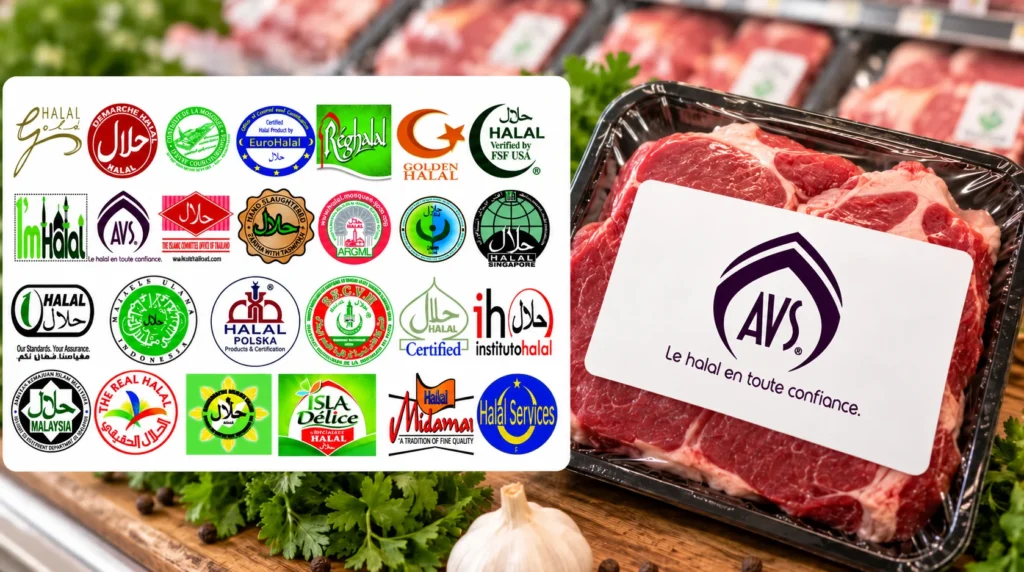
Halal certification guarantees that a product meets Islamic requirements at every stage: the animal’s origin, slaughter, processing, packaging and transport. It is issued by an independent certification body, which audits the company and authorises it to display its halal logo on the packaging.
This point is crucial: in both the UK and the US, the word “halal” on a label is not a government-controlled designation. What gives a product real value is not the word itself, but the backing of a recognised certifier. And because certifiers apply different standards, especially on stunning and machine slaughter, two products labelled halal-certified meat may not meet the same criteria.
Main halal certifiers in the UK and the US
| Certifier | Country | Key standard |
|---|---|---|
| HMC (Halal Monitoring Committee) | UK | No stunning, hand slaughter only, supervision from abattoir to outlet |
| HFA (Halal Food Authority) | UK | Accepts reversible stunning that does not kill the animal |
| IFANCA | US | Crescent-M logo; accepts mechanical poultry slaughter under specific conditions |
| HFSAA (Halal Food Standards Alliance of America) | US | Zabiha focus: hand slaughter and no stunning |
| ISA (Islamic Services of America) | US | Meat, poultry and processed foods |
HMC halal is one of the most searched certifications in the UK, precisely because many consumers look for its strict non-stun, hand slaughtered standard. In the US, shoppers who want zabiha halal meat often look for HFSAA, while IFANCA’s Crescent-M logo is widely seen on packaged products. None of these is “the only valid one”: each follows its own scholarly guidance, and the right choice depends on your own criteria.
What to check on a halal label or logo
Before putting a product in your basket, check these points:
- The certifier’s name. A trustworthy halal logo clearly shows who certified the product. If the label only says “halal” with no further information, be cautious.
- A clear, complete logo. Many certifiers include a code or registration number you can use to verify the certificate.
- “Pork-free” is not the same as halal. A pork-free product may contain meat that wasn’t slaughtered according to Islamic rules or ingredients of doubtful origin.
- Arabic writing is not certification. Arabic script or Middle Eastern designs on packaging guarantee nothing on their own.
- The ingredients list. Even with a logo, checking the ingredients and additives gives you an extra layer of confidence.
The problem is that, in real life, it isn’t always easy to do all this in front of the shelf, in a hurry and with tiny print. That’s where technology can help.
Halal chicken: what to look for when buying it
Halal chicken is one of the most searched halal products in both the UK and the US. It’s affordable, versatile and part of many families’ everyday meals. Yet it’s also one of the products that raises the most questions, because it’s sold in many different formats and the information isn’t always clear.
Fresh vs processed chicken
With fresh chicken (whole birds, breasts, thighs or wings), what matters most is the origin: it should come from a certified slaughterhouse, and the packaging or butcher should show a recognised halal logo. If you buy from a halal butcher, don’t hesitate to ask which certifier backs their meat. A reputable butcher will be happy to tell you.
With processed chicken, things get more complicated. Nuggets, marinated breasts, chicken deli slices, wings in sauce or breaded chicken all contain an ingredients list on top of the meat: flavourings, flavour enhancers, stabilisers, colourings or fats. Even if the chicken itself is halal, some of those ingredients may not be.
Poultry is also where the stunning and machine slaughter debate matters most, since large poultry plants process birds at high speed. If hand slaughtered or non-stunned chicken is important to you, check the certifier’s standard rather than relying on the word halal alone.
How to check if chicken is halal in seconds
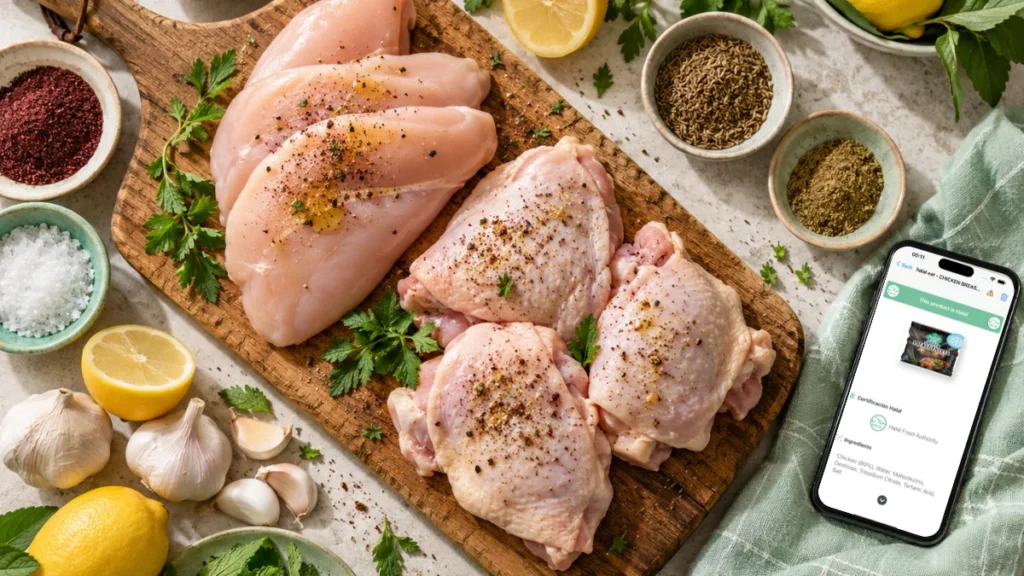
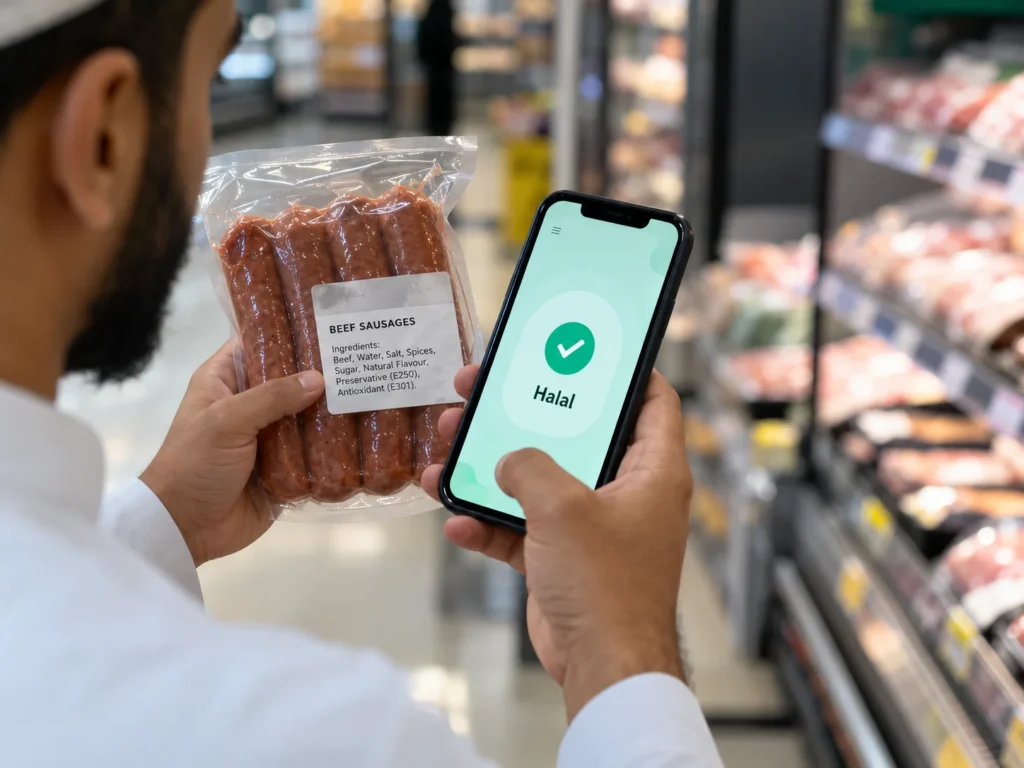
In front of the supermarket fridge, with several brands and different logos, it isn’t always easy to know which one to choose. That’s why we created TagHalal, an app that helps you check products quickly.
Just scan the barcode on the pack. If the product is in our database, the app shows you whether it has an identified halal certification and which certifier it comes from. It also analyses the ingredients and additives to tell you whether they are halal, haram or mushbooh. In a few seconds, you know whether that chicken meets your standards.
We want to be transparent: TagHalal cannot verify by itself how a specific animal was slaughtered. What it does is bring together the available information on certifications and ingredients so you can make an informed decision.
Halal burgers, sausages and deli meat: the ingredients you can’t see
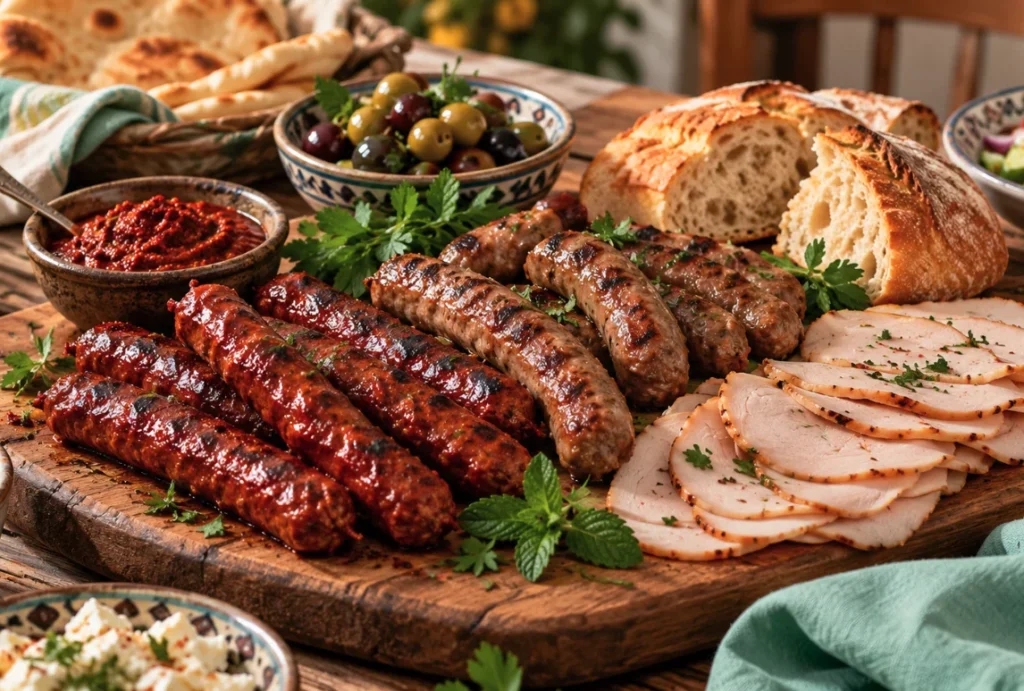
With processed meat products, the meat being halal is only half the story. The other half is in the ingredients list, where you may find animal-derived ingredients, food additives with little-known E-numbers or even traces of alcohol. That’s why these products deserve a closer look.
Halal burgers
Halal burgers are among the most popular halal products, especially in the US. Beyond the beef or chicken, burgers often contain binders, starches, proteins, flavourings and fats. The patty itself may be halal while the bun, the cheese or the sauce contains doubtful ingredients, so it’s worth checking every component, not just the meat.
Halal sausages
Halal sausages need extra attention for two reasons. First, the casing: many traditional sausages use natural pork casings, so halal sausages should use casings from a permitted animal, such as beef or lamb, or a collagen, cellulose or plant-based casing. Second, the additives: emulsifiers, stabilisers and flavour enhancers can be of plant, synthetic or animal origin, and the label doesn’t always say which.
A common example is mono- and diglycerides of fatty acids (E471). They can be made from plant or animal fats, including pork fat. When the manufacturer doesn’t state the source, they are considered mushbooh, or doubtful.
Halal deli meat
Halal deli meat, such as turkey slices, beef pastrami, chicken salami or halal pepperoni, has become much easier to find. Still, cured products may contain wine, flavourings dissolved in alcohol or colourings such as carmine (E120), a red dye made from insects on which schools of thought disagree. Always check the certification and the ingredients.
Halal gelatin and other doubtful additives
Gelatin is probably the ingredient that causes the most surprises. It’s made from collagen in animal bones and skins, and a large share of the gelatin used in the West comes from pigs. It appears in sweets, desserts, yoghurts, marshmallows and some processed meats, sometimes listed simply as gelatin or as E441.
Halal gelatin does exist: it can come from beef slaughtered according to Islamic rules or from fish, and it should be certified. There are also plant-based alternatives, such as agar-agar (E406) or pectin (E440), which raise no concerns at all.

TagHalal App
How to check ingredients without being an expert
Nobody should have to memorise hundreds of additives and E-numbers. That’s what TagHalal is for: on top of certification, the app analyses each product’s ingredients and tells you the status of every additive as halal, haram or mushbooh.
If a product isn’t in the database, simply point your camera at the ingredients list and the ingredient scanner will identify them one by one. And because we know there are different schools of thought, you can adjust the status of any additive to match your own criteria. The app will remember it in your future scans.
Where to buy halal meat
Buying halal meat is much easier today than it was a few years ago. Depending on where you live and what you’re looking for, you have several options, each with its own advantages.
Halal butchers near you
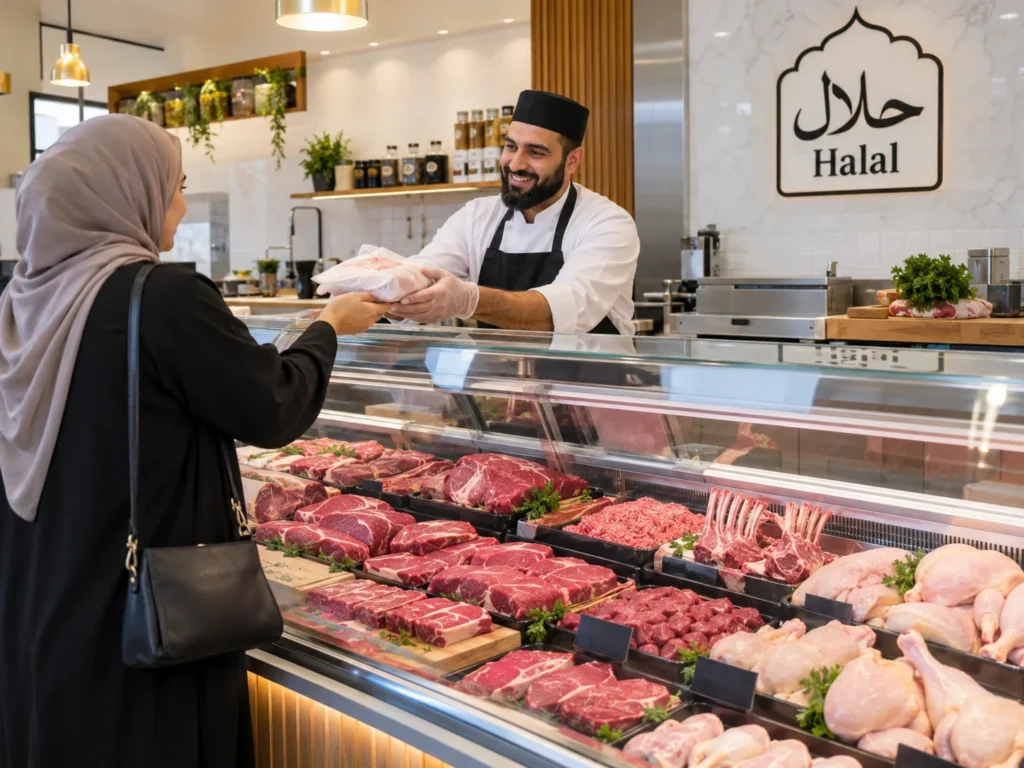
When people search for halal meat near me, they’re usually looking for a local halal butcher, and for good reason. Butchers offer fresh meat, custom cuts and the chance to ask directly about origin and certification. Look for the certifier’s logo on the door or counter, and don’t be shy about asking questions: a good halal butcher will be glad to answer.
Supermarkets
More and more supermarkets now stock halal products, especially in areas with large Muslim communities. You’ll typically find packaged chicken, mince, sausages, deli slices and frozen products. The upside is convenience; the downside is that the variety of logos and brands can be confusing. This is where checking the label, or scanning the product with an app, makes all the difference.
Halal meat online and delivery
Buying halal meat online is a great option if there’s no halal butcher nearby. Many shops offer halal meat delivery straight to your door in chilled packaging. Before ordering, check that the shop clearly states the certifier, the origin of the meat and how it maintains the cold chain during delivery.
How much does halal meat cost?
The price of halal meat is usually similar to, or slightly higher than, regular meat. The difference comes from certification costs, specialised labour for slaughter and smaller-scale production. Hand slaughtered and non-stunned products, which require more time and supervision, tend to cost a little more. At local butchers and large supermarkets with high volumes, the difference can be minimal.
Frequently asked questions about halal meat
Can non-Muslims eat halal meat?
Yes, of course. Halal meat is suitable for everyone and meets all food safety standards. In fact, many non-Muslims eat it regularly, often without knowing, because a significant share of the meat sold in the UK and Europe comes from halal-certified slaughterhouses.
What does mushbooh mean?
Mushbooh means “doubtful”. It applies to products or ingredients whose status isn’t clear, for example when the manufacturer doesn’t state the source of an additive. Mushbooh doesn’t mean haram: it means information is missing. Many Muslims prefer to avoid mushbooh products out of caution, following the principle of staying away from what is doubtful.
Is pork-free food automatically halal?
No. A pork-free product may contain beef or chicken that wasn’t slaughtered according to Islamic rules, or ingredients such as alcohol or additives of doubtful origin. To be sure, look for a recognised halal certification and check the ingredients.
What are haram ingredients?
Haram ingredients are those forbidden in Islam. The most common in processed foods are pork and its derivatives (such as lard or pork gelatin), alcohol, blood and meat from animals not slaughtered according to Islamic rules. Some additives, like certain emulsifiers or colourings, can also be haram depending on their source.
Conclusion: buy halal meat with confidence
Halal meat is much more than a label. It means a permitted animal, a slaughter carried out with respect according to Islamic rules, and a supply chain that avoids any contact with what is forbidden. In the UK and the US it is legal, regulated and easier to find than ever, at local butchers, supermarkets and online shops.
The key to shopping with peace of mind comes down to three simple steps: look for halal certification from a recognised body whose standard matches yours, read the label, and pay special attention to processed products such as burgers, sausages, deli meat or anything that may contain gelatin or doubtful additives.
And if you’d like to do it in seconds, without memorising E-numbers or squinting at tiny print, download TagHalal. Scan the barcode or the ingredients list, check the certification and the status of every additive, and fill your basket knowing exactly what you’re eating.