Cheese looks like one of the simplest foods in the supermarket: milk, salt and not much else. But behind almost every cheese there is an ingredient we rarely think about: rennet. For Muslims, that small detail can make the difference between a food that is Halal (حلال), Haram (حرام) or Mushbooh (مشبوه), meaning doubtful.
So, is rennet halal or haram? The short answer is: it depends on where it comes from. Rennet can come from an animal’s stomach, from microorganisms or from plants, and each type has a different status in Islamic jurisprudence.
In this guide, we explain in simple terms what rennet is, where it comes from, what chymosin and rennin are, the different types of rennet, and most importantly, how to know if a cheese is halal before it goes into your shopping basket.
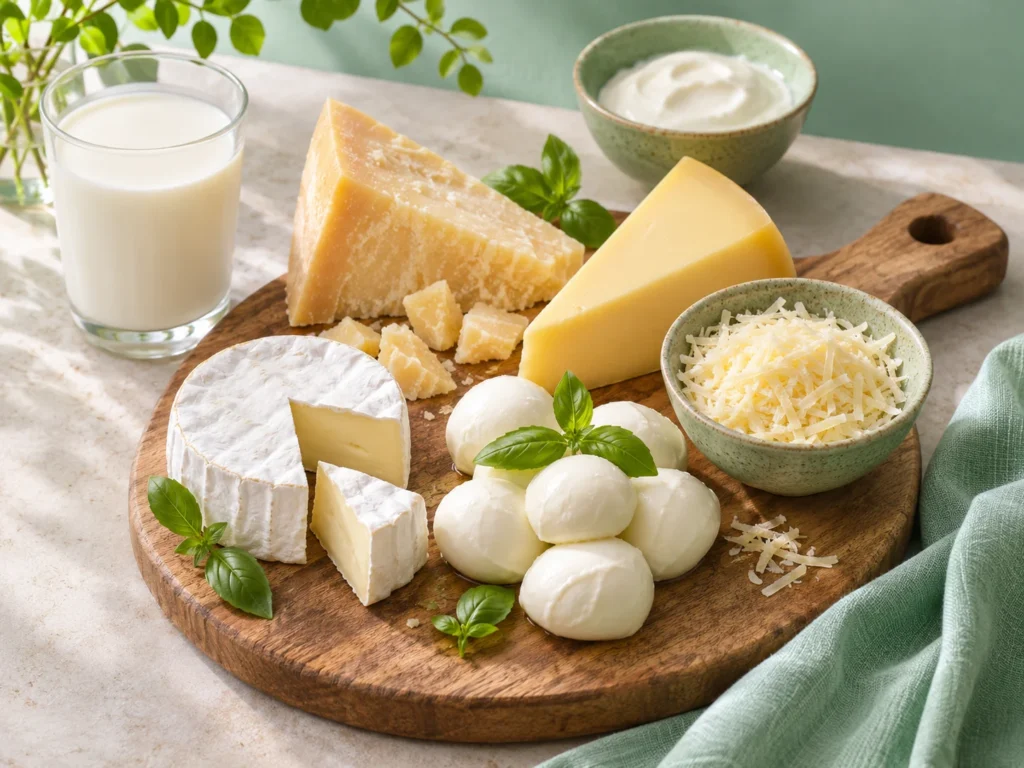
What Is Rennet in Cheese and What Is It Used For?
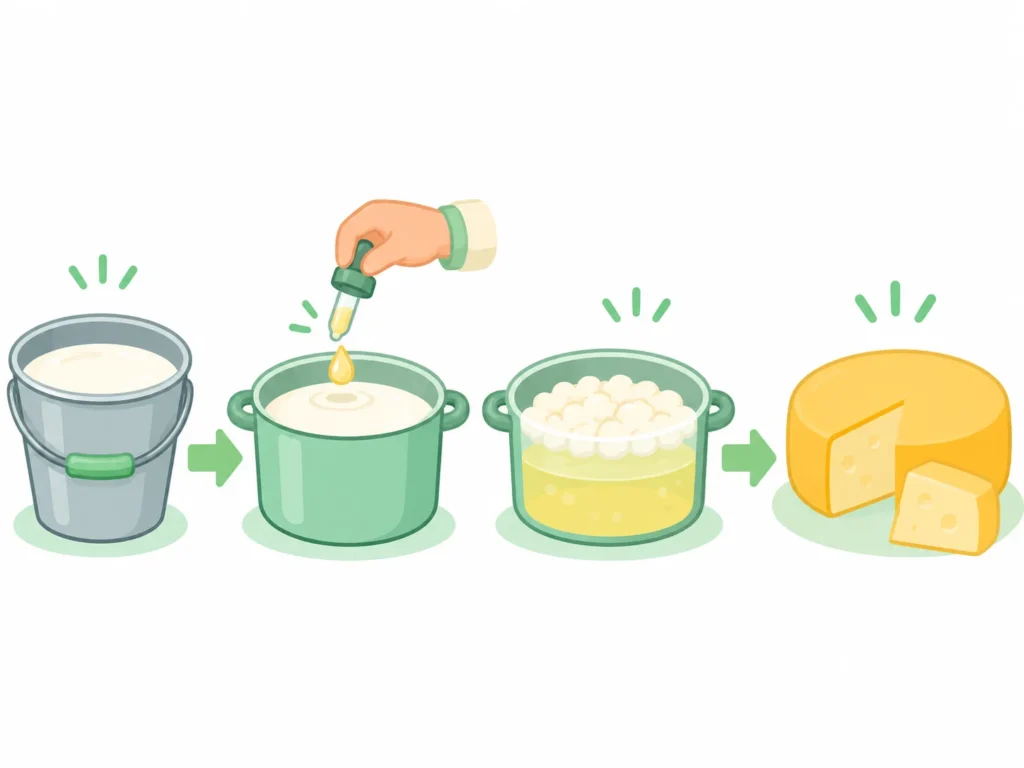
Rennet is a substance containing enzymes that make milk thicken and separate into two parts: the curds (the solid part that becomes cheese) and the whey (the liquid part).
Without rennet, most aged and semi-hard cheeses simply would not exist. That is why rennet for cheese is one of the oldest ingredients in human food history, used for thousands of years across the Middle East, the Mediterranean and Central Asia.
Not every dairy product needs rennet. Some fresh cheeses, ricotta and paneer are made with acid only (lemon juice, vinegar or cultures). But in cheeses such as cheddar, gouda or parmesan, rennet is essential.
Where Does Rennet Come From?
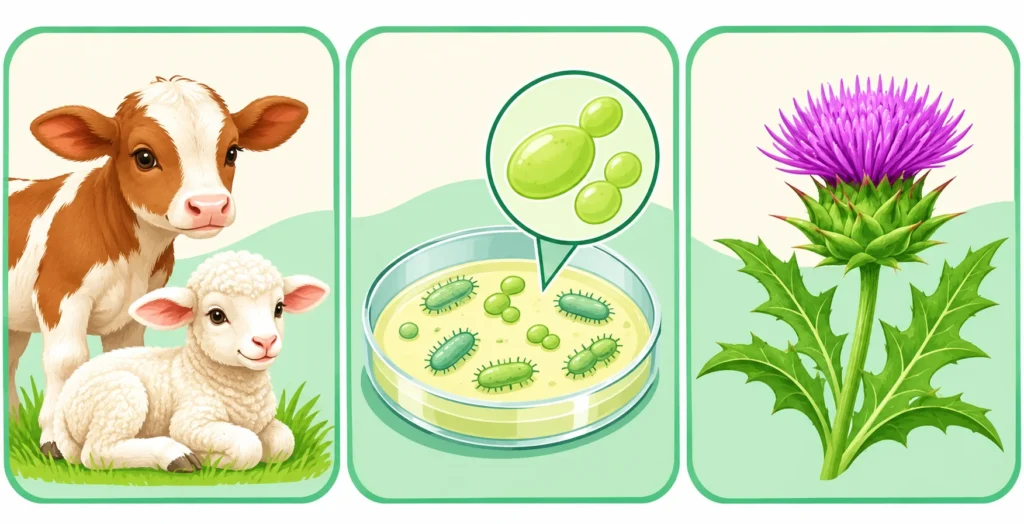
Traditionally, rennet is taken from the fourth stomach (abomasum) of young ruminants that are still drinking milk, such as calves, lambs and young goats. This stomach naturally produces an enzyme that helps the young animal digest its mother’s milk.
Today, however, rennet can also come from other sources:
- Microorganisms (fungi or bacteria) that produce coagulating enzymes.
- Plants, such as thistle or fig.
- Fermentation, using microorganisms that produce chymosin identical to the animal version.
So when a Muslim simply reads «rennet» on a label, they still don’t know whether that cheese is halal: the source is everything.
How Is Rennet Made and How Does It Work?
The rennet enzyme acts on a milk protein called casein. By «cutting» it, the enzyme makes the proteins bind together into a solid mass. This process is called coagulation or curdling.
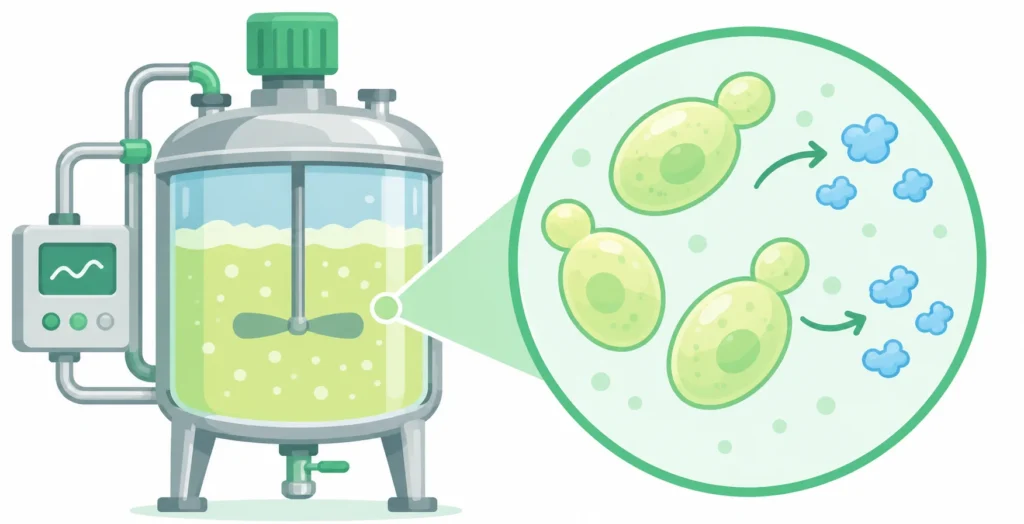
Animal rennet is made by cleaning, drying or soaking the stomach lining in a salt solution to extract the enzymes. Microbial and fermentation-based rennets are produced in large fermentation tanks, without using any animal stomachs.
One important point: the amount of rennet used is tiny compared to the milk. But in Islam, what matters is not only the quantity, but the origin of the ingredient. That is why this small component raises so many questions in the Muslim community.
Another detail few people know: the whey left over from cheesemaking comes from the same process. It is used in biscuits, protein shakes, bread and snacks. So the rennet question doesn’t only affect cheese, but many processed foods too.
Chymosin and Rennin: The Key Enzymes in Rennet
If you have ever looked up information about rennet, you have probably come across two technical words: chymosin and rennin. In practice, they are used almost as synonyms.
Chymosin is the main enzyme in animal rennet, the one that actually coagulates the milk. Rennin is the older name for this same enzyme (not to be confused with «renin», a different substance produced by the kidneys).
Traditional animal rennet is mostly chymosin, but it can also contain pepsin, another digestive enzyme. And this is where things get sensitive: pepsin can come from cattle or from pigs. That is why an unspecified animal rennet may hide ingredients of pork origin.
Fermentation-Produced Chymosin (FPC)
For decades, the food industry has also used fermentation-produced chymosin, often shortened to FPC. It is made by microorganisms (yeasts, moulds or bacteria) that produce chymosin identical to calf chymosin, without using animal stomachs.
Today, a large share of industrial cheese is made with this type of chymosin, because it is cheaper, more consistent and easier to produce at scale. For Muslims this is good news: many scholars and halal certification bodies consider fermentation-produced chymosin halal, provided the growth medium and any additives used are free from haram ingredients.
The problem is that labels often don’t say which type of chymosin is used. Sometimes you will only see «rennet», «enzymes» or «coagulant». And that is where the doubt begins.
Types of Rennet: Animal, Microbial and Vegetable
To know whether a cheese is halal, the first step is to understand the types of rennet that exist. Each one has a different origin and, therefore, a different ruling from an Islamic point of view.
Animal Rennet (Calf, Lamb and Kid Rennet)
Animal rennet is extracted from the stomachs of young ruminants:
- Calf rennet: the most widely used in the European cheese industry.
- Lamb rennet: common in sheep’s milk cheeses, including many traditional Mediterranean cheeses.
- Kid rennet: typical of artisan goat’s cheeses.
These animals are halal in themselves. The real question is whether they were slaughtered according to Islamic rites (zabihah). In Europe, North America and Australia, the vast majority are not. That is why animal rennet is debated among scholars, as we will see below.
Pork Rennet and Porcine Pepsin
Pork rennet as such is rarely used in cheesemaking, but porcine pepsin can appear in some enzyme blends. It is also used in other processes in the food industry.
The problem is that labels almost never say so. You will rarely read «pig rennet»: you will usually just see «rennet» or «enzymes». That lack of information is exactly what makes many cheeses Mushbooh (doubtful).
Microbial Rennet (Microbial Coagulant)
Microbial rennet, also called microbial coagulant, is obtained from moulds such as Rhizomucor miehei or Cryphonectria parasitica. It does not come from any animal.
It is widely used in industrial cheeses and in cheeses suitable for vegetarians. On labels it often appears as «microbial coagulant», «microbial enzymes» or «non-animal rennet».
Vegetable Rennet (Plant Rennet)
Vegetable rennet, also known as plant rennet, is extracted from plants. The best known comes from the thistle flower, used in traditional Spanish and Portuguese cheeses. Fig tree sap has also been used historically.
It is less common, but highly valued in artisan cheeses for the creamy, slightly bitter flavour it gives.
What Does «Natural Rennet» Mean on a Label?
There is a lot of confusion here. The term «natural rennet» is usually used for traditional animal rennet taken from the stomachs of ruminants. It does not necessarily mean «vegetable» or «halal».
So if you see «natural rennet» on a cheese, the prudent approach is to treat it as animal rennet unless the manufacturer states otherwise.
So, Is Rennet Halal or Haram?
Now that you know the types of rennet, let’s get to the key question: is rennet halal? The table below sums up the usual status of each type, based on the most widely held view among scholars and halal certification bodies.
| Type of rennet | Source | Usual status |
|---|---|---|
| Microbial rennet / microbial coagulant | Moulds or bacteria | Halal |
| Vegetable rennet | Thistle, fig and other plants | Halal |
| Fermentation-produced chymosin (FPC) | Microorganisms | Halal (if the growth medium is halal) |
| Animal rennet from zabihah-slaughtered animals | Calf, lamb or kid | Halal |
| Animal rennet from animals not slaughtered Islamically | Calf, lamb or kid | Mushbooh (scholars differ) |
| Pork rennet or porcine pepsin | Pig | Haram |
| Unspecified «rennet» or «enzymes» | Unknown | Mushbooh |
As you can see, the main grey area is animal rennet from animals that were not slaughtered Islamically, which is precisely the most common kind in traditional European cheeses.
Is Animal Rennet Halal?
For any animal product to be halal, two conditions must be met:
- The animal itself must be halal (cow, sheep, goat… but never pig).
- It must have been slaughtered correctly (zabihah or dhabihah).
Calves, lambs and kids meet the first condition. The problem is the second: in most Western countries, the animals used for rennet are not slaughtered according to Islamic rites. That is why many certification bodies consider such rennet not halal, or at least doubtful.
What Do the Schools of Islamic Law Say?
There is no single answer on this issue, and it is important to know this so we don’t judge other Muslims who follow a different opinion:
- The majority of scholars (in the Shafi’i, Maliki and Hanbali schools, according to their best-known positions) consider rennet from an animal not slaughtered Islamically to be not halal, because it comes from an improperly slaughtered animal.
- In the Hanafi school, Imam Abu Hanifa held that rennet is pure even if the animal was not ritually slaughtered. His two main students, Abu Yusuf and Muhammad, did not share this view.
- Some scholars, such as Ibn Taymiyyah, leaned towards permissibility, pointing out that the Companions of the Prophet ﷺ ate cheese made by the Persians.
That is why, when faced with a cheese made with non-halal animal rennet, many Muslims prefer to avoid it out of caution, following the hadith that advises leaving what is doubtful for what is not. Others, following opinions such as the Hanafi one, eat it with peace of mind. If you are unsure, it is best to ask a trusted scholar or imam.
Why Pork Rennet Is Always Haram
Here there is no difference of opinion. Pork and all its derivatives are haram according to the Qur’an and the consensus of scholars. This includes pork rennet and porcine pepsin, even in tiny amounts.
The real challenge is not knowing that pork is haram, but detecting it, because it almost never appears clearly on the label.
Is Microbial Rennet Halal? The Safest Choice
If you want maximum peace of mind, the best choice is cheese made with microbial rennet, non-animal rennet or vegetable rennet. Since they don’t come from animals, the vast majority of scholars consider them halal.
That said, the cheese must also be free from other doubtful ingredients, such as certain additives, colourings or flavourings. Rennet is an important part of the picture, but not the only one.
How to Know if Cheese Is Halal
Now that you understand the role of rennet, let’s get practical: how do you choose halal cheese at the supermarket? Here are the key things to check.
Cheese With Animal Rennet vs. Cheese Without Animal Rennet
Start by reading the ingredients list carefully:
- Cheese with animal rennet: if it says «animal rennet», «natural rennet», «calf rennet» or «lamb rennet» and has no halal certification, the prudent choice is to treat it as Mushbooh.
- Cheese without animal rennet: if it says «microbial coagulant», «microbial rennet», «vegetable rennet» or «non-animal rennet», that is a very good sign.
- Just «rennet» or «enzymes»: with no further details, the cheese is doubtful. You can contact the manufacturer or use a halal checker app.
Is Vegetarian Cheese Halal?
Vegetarian cheese is made without animal rennet, so it is usually a good option for Muslims. In the UK, for example, many supermarket cheeses are labelled as suitable for vegetarians. But vegetarian does not always mean halal:
- It may contain flavourings or additives of doubtful origin.
- Some cheeses may contain alcohol, either as a solvent for flavourings or because they are washed in wine or spirits.
- A vegetarian label guarantees there is no meat, but it does not follow Islamic criteria.
In short: vegetarian cheese is an excellent starting point, but always check the rest of the ingredients too.
Is Parmesan Cheese Halal?
Authentic Parmesan (Parmigiano Reggiano PDO) is made, by regulation, with calf rennet. That is why traditional parmesan is not considered halal unless it carries a specific halal certification.
The same applies to many European cheeses with protected designation of origin (PDO): their rules often require traditional animal rennet. On the other hand, «parmesan-style» or «Italian hard cheese» products from industrial brands often use microbial coagulant. If you are looking for halal parmesan, always check the label or choose alternatives made with microbial rennet.
Is Cheddar, Mozzarella, Feta or Cream Cheese Halal?
These are some of the most searched cheeses by Muslims. The general rule is always the same: check the rennet. But here are a few useful pointers:
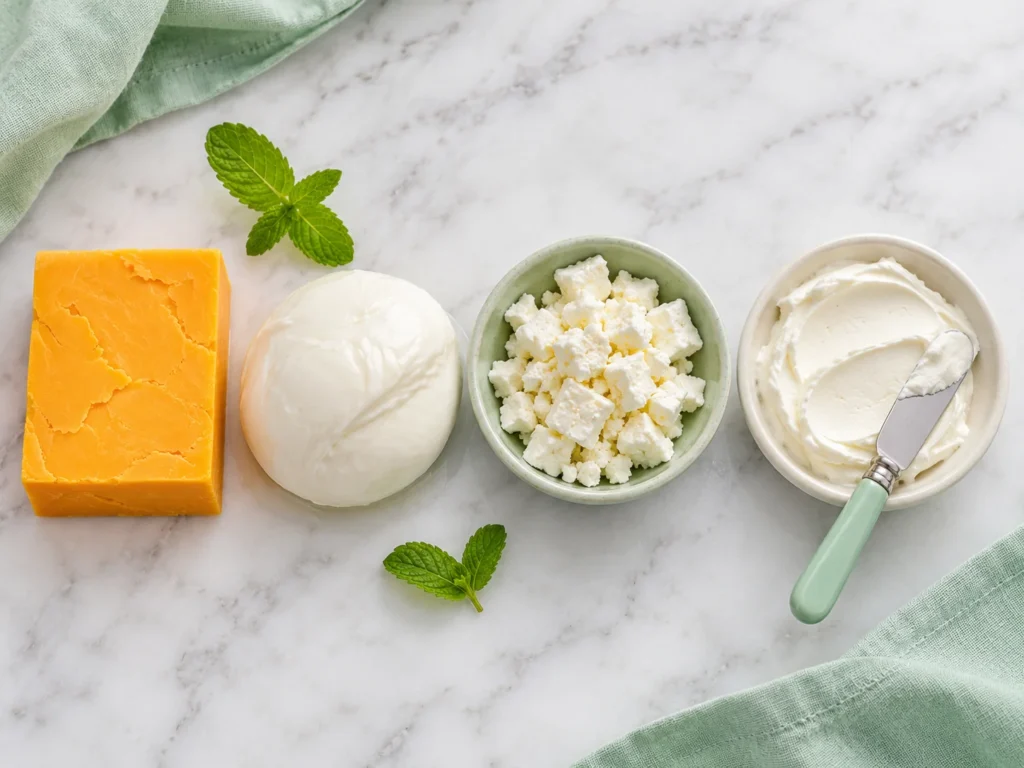
- Is cheddar cheese halal? Many mass-produced cheddars, especially in the UK, are made with microbial or vegetarian rennet. Traditional farmhouse cheddars, however, may use animal rennet.
- Is mozzarella halal? Many industrial mozzarellas use microbial coagulant, but some traditional ones use calf rennet. Check the label of each brand.
- Is feta cheese halal? It depends on the producer: some traditional fetas use animal rennet, while many supermarket brands use microbial rennet.
- Is cream cheese halal? Cream cheese is mainly set with cultures, but some versions contain a small amount of rennet or additives such as gelatine. Always read the ingredients.
What to Look for on the Label: Words and Halal Certification
Keep these terms in mind when checking a cheese:
| What the label says | What it means for you |
|---|---|
| Halal logo or certificate | Halal, verified by a certification body |
| Microbial coagulant / microbial rennet | Non-animal origin: halal in principle |
| Vegetable rennet | Plant origin: halal in principle |
| Suitable for vegetarians | No animal rennet: check other ingredients |
| Animal rennet / natural rennet | Mushbooh if there is no halal certificate |
| Unspecified rennet or enzymes | Mushbooh: missing information |
| Porcine pepsin / pork rennet | Haram |
The safest option is always cheese with halal certification from a recognised body. Looking for halal cheese brands? Check the certification logos used in your country and your local halal certifier’s product lists. If a product has no certificate, the ingredients list is your best ally.

Check if Your Cheese Is Halal in Seconds With TagHalal
Reading every label, remembering what each type of rennet means and checking every additive can be exhausting, especially when you are in a hurry or travelling in a country whose language you don’t speak. That is exactly why we created TagHalal.
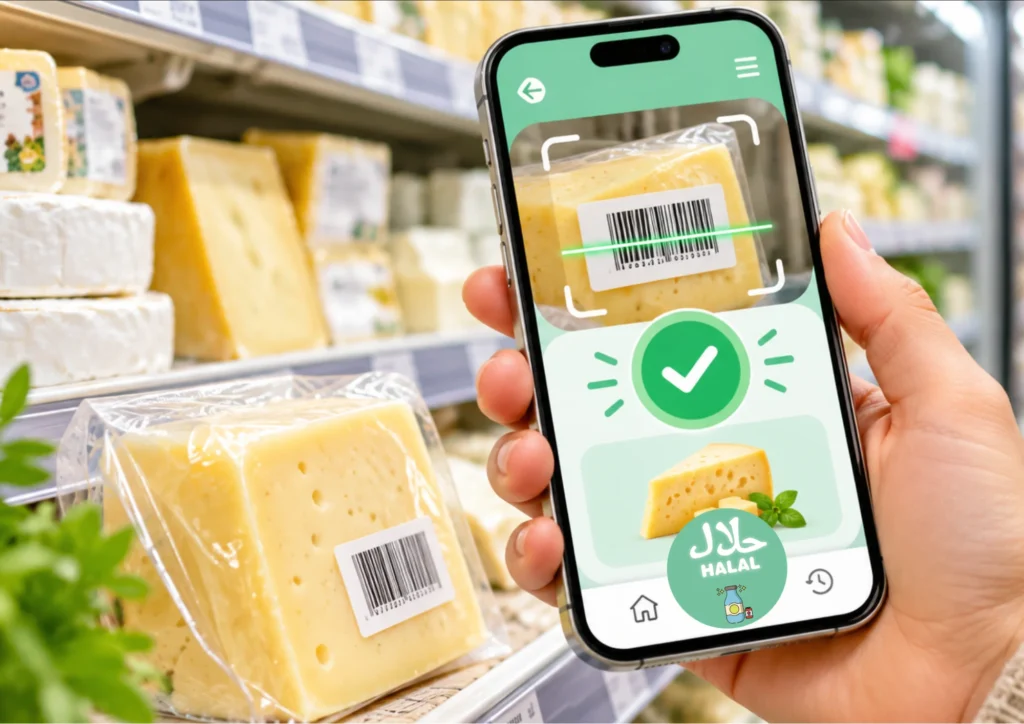
TagHalal is a halal scanner app that helps you decide whether a product is Halal, Haram or Mushbooh in just a few seconds:
- Barcode scanning: point your camera at the cheese’s barcode and the app checks its database to show you the product details.
- Ingredient scanning (OCR): if the product isn’t in the database, simply point the camera at the ingredients list. The app picks up terms such as animal rennet, microbial coagulant, enzymes or additives and shows you their status.
- Flags doubtful ingredients: when a label only says «rennet» or «enzymes» without stating the source, TagHalal marks it as suspicious (Mushbooh), so you can decide with full knowledge.
- Customise it to your school of thought: as we have seen, scholars don’t all agree on animal rennet. In TagHalal you can adjust the status of any ingredient or additive to match your own view or madhhab, and the app will remember it for future scans.
- Send products for review: if a cheese isn’t in the app yet, you can submit it so the team can analyse it and add it to the database for the whole community.
Beyond cheese, TagHalal also checks additives and E-numbers in biscuits, sweets, snacks and drinks, and shows information on their toxicity level and whether they are approved in Europe, the United States and Australia.
No app can replace a halal certificate or the guidance of a scholar, but TagHalal gives you the information you need to shop with peace of mind and make informed choices.
👉 Download TagHalal and scan your next cheese

TagHalal App
Frequently Asked Questions About Halal Rennet (FAQ)
Is rennet halal or haram?
It depends on the source. Microbial rennet and vegetable rennet are considered halal. Animal rennet is halal if it comes from an animal slaughtered according to Islamic rites; if not, it is doubtful and scholars differ. Pork rennet and porcine pepsin are always haram.
Is animal rennet halal?
Animal rennet is halal when it comes from a halal animal slaughtered Islamically (zabihah). Rennet from calves or lambs not slaughtered Islamically is considered not halal by most scholars, although the Hanafi school, following Imam Abu Hanifa, allows it. When in doubt, follow your school and ask a trusted scholar.
Is microbial rennet halal?
Yes. Microbial rennet, also called microbial coagulant, comes from moulds or bacteria, not from animals, so it is considered halal. Even so, it is worth checking that the rest of the cheese’s ingredients, such as flavourings or additives, are halal too.
Is chymosin halal?
Chymosin is the main enzyme in rennet, the one that curdles milk. When it is fermentation-produced chymosin made by microorganisms, most certification bodies consider it halal. When it comes from the stomach of a calf not slaughtered Islamically, it is considered doubtful.
Is cheese haram?
No, cheese is not haram in itself. A cheese becomes haram if it contains pork-derived ingredients such as porcine pepsin, and doubtful if it uses animal rennet from animals not slaughtered Islamically. Cheeses made with microbial or vegetable rennet are generally halal.
Is vegetarian cheese halal?
Vegetarian cheese is usually a good option, because it doesn’t contain animal rennet. But vegetarian doesn’t always mean halal: it can contain flavourings, additives or alcohol. Always check the full ingredients list before buying.
Is parmesan halal?
Authentic Parmigiano Reggiano is made with calf rennet, so it is not considered halal without certification. Many industrial «parmesan-style» cheeses use microbial coagulant and can be a good alternative. Check the label in each case.
Is cheddar cheese halal?
Many mass-produced cheddars, especially in the UK, are made with microbial or vegetarian rennet, which makes them halal in principle. Traditional farmhouse cheddars may use animal rennet. Look for «suitable for vegetarians», a halal logo, or scan it with a halal checker app.
How can I tell if a cheese contains pork rennet?
It is difficult, because labels rarely say so. If it only says «rennet» or «enzymes» with no source, the cheese is doubtful. Look for a halal logo, contact the manufacturer, or use an app like TagHalal, which flags these ingredients as suspicious.
Conclusion: Choose Your Cheese With Knowledge and Peace of Mind
Rennet is a small ingredient, but it matters a great deal to anyone who follows a halal diet. To sum up:
- Microbial rennet and vegetable rennet are halal.
- Fermentation-produced chymosin is considered halal in most cases.
- Animal rennet is halal only if it comes from an animal slaughtered according to Islamic rites; otherwise it is doubtful and scholars hold different views.
- Pork rennet and porcine pepsin are always haram.
- When the label doesn’t state the source, the prudent approach is to treat the cheese as Mushbooh.
This isn’t about fearing every product on the shelf, but about shopping with knowledge. Reading the label, looking for a halal logo and relying on tools like TagHalal will help you make better choices for yourself and your family, without wasting time at the supermarket.
If you found this article useful, share it with your family and friends, so more people in the community can choose their cheese with peace of mind.